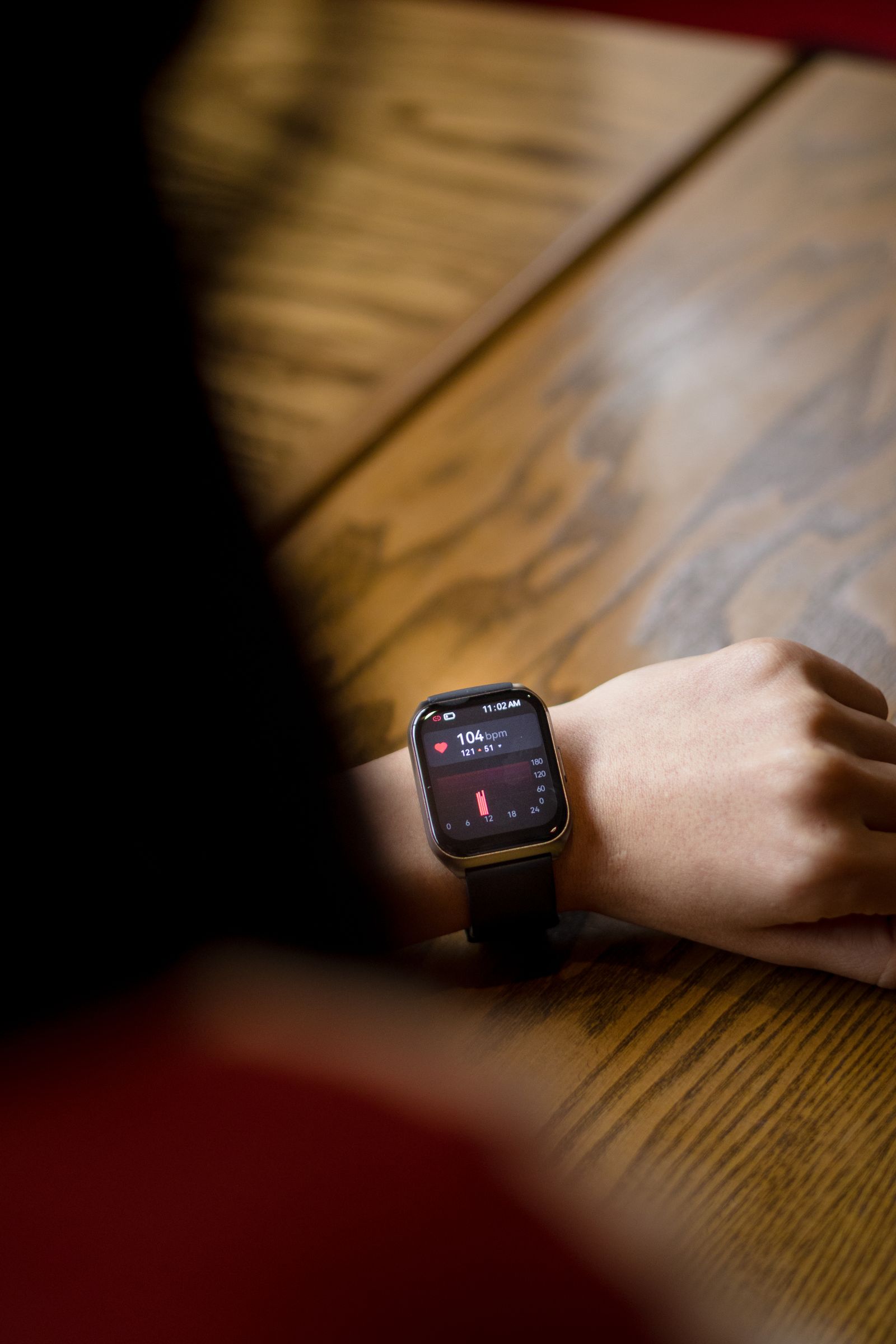
There's no single best longevity wearable — there's the right one for the metric you'll actually use. Rings (Oura, Samsung) own sleep and HRV trends; watches (Apple, Garmin, Withings) own ECG and on-demand cardio; CGMs (Stelo, Lingo) own metabolism. The one number with the strongest link to living longer is cardiorespiratory fitness, so favour a device whose data you'll act on — not the one with the longest spec sheet.
The best longevity wearable isn’t the one with the most sensors — it’s the one whose data you’ll actually use to change something. A device that tracks forty metrics you ignore is worse than one that surfaces the single number that moves you to walk more, sleep earlier, or finally test your cardio.
So this guide is organised around a question, not a product: what do you most want to know about your body? Answer that, and the right device falls out. Everything here is educational and not medical advice — these tools estimate, they don’t diagnose.
Which wearable fits you?
There’s no universal winner. Pick what you care about most and start there — you can always layer in a second device later.
What do you most want to track?
Tap a priority. We'll point you at the device that owns that metric — and note the honest trade-off.
Pick a priority above
Your recommendation appears here — with the catch you should know before buying.
Recommendations are general and based on each device's strengths, not your medical situation. Anyone with a heart condition should choose and interpret these tools with a clinician.
The metric that actually predicts how long you’ll live well
If you only track one thing, track your cardio. In a Cleveland Clinic study of more than 120,000 patients, higher cardiorespiratory fitness was linked to lower all-cause mortality with no observed ceiling — the fittest people kept gaining benefit, and the least-fit quartile carried several times the mortality risk of the elite-fit (Mandsager et al., JAMA Network Open, 2018). That fitness shows up on your wearable as an estimated VO2 max.
Two honest caveats. First, a wrist or ring VO2 max is an estimate from heart rate and pace, not a lab test — use the trend, not the decimal. Second, the way you raise it is training, especially easy aerobic Zone 2 work plus the occasional hard effort. The wearable’s job is to show you whether the line is going up.
After fitness, resting heart rate is a simple, well-supported signal — a higher resting pulse tracks with higher mortality across large cohorts. Heart-rate variability is worth watching as your own trend, but read it as a marker of overall load and health rather than a number to game. Sleep and glucose have plausible links to healthspan, but the hard longevity evidence in healthy people is thinner — so weight them accordingly.
The seven wearables worth considering
These are the devices that earn their place in 2026. Each links to its official page — pick on the one metric you’ll use, not the spec sheet.
Devices, and who each is for
The gold standard for sleep staging, resting HR, HRV and temperature in a wear-it-every-night form factor. Membership is effectively required, and there's no workout display.
Screenless strain-and-recovery coaching with a 2026 "Healthspan" age estimate; the top tier adds medical-grade ECG. You never own it — it's subscription-only, and the age score is a trend, not a diagnosis.
The widest FDA-cleared health suite — ECG, SpO2, temperature, sleep apnea and hypertension notifications — in a full smartwatch. iPhone-only, ~1–2 day battery, and it competes with sleep tracking for charge time.
Deep VO2 max, training-load and recovery analytics with multi-day battery and no paywall. The catch is choice paralysis — Venu, Forerunner and Fenix overlap, so it's easy to buy the wrong one.
Medical-grade on-demand ECG, temperature and sleep in a hybrid watch that looks like a real timepiece and lasts roughly a month per charge. The trade-off: a tiny dial, so you read everything in the app.
Sleep, HRV and an unusual metabolic-aging "AGEs Index" with no subscription. Best inside the Samsung ecosystem; the aging index is a novel, lightly validated proxy — a curiosity, not a clinical measure.
Over-the-counter continuous glucose monitors that reveal how specific meals and habits move your blood sugar — the one signal no ring or watch captures. For a short experiment, not forever; not for insulin dosing.
Links go to official manufacturer pages. AMORTAL has no affiliate relationship with these brands — prices are mid-2026 ballparks and shift with promotions and new releases.
Side by side: what each device measures
Rings own sleep and HRV; watches own ECG and on-demand cardio; CGMs own metabolism. No device covers everything — which is exactly why the metric you care about should pick the hardware.
| Device | HRV | Resting HR | VO2 max | Sleep | SpO2 | Temp | ECG | Glucose | Price | Subscription |
|---|---|---|---|---|---|---|---|---|---|---|
| Oura Ring 5 | ✓ | ✓ | indirect | ✓ | ✓ | ✓ | — | — | $399–$499 | Required |
| Whoop 5.0 / MG | ✓ | ✓ | ✓ | ✓ | ✓ | ✓ | ✓ (top tier) | — | $199–$359/yr | Sub-only |
| Apple Watch Ultra 3 | ✓ | ✓ | ✓ | ✓ | ✓ | ✓ | ✓ (FDA) | — | ~$799 | None |
| Garmin Venu 4 | ✓ | ✓ | ✓ | ✓ | ✓ | varies | some models | — | ~$550 | None |
| Withings Nova | ✓ | ✓ | indirect | ✓ | ✓ | ✓ | ✓ (medical) | — | $500–$600 | Optional |
| Samsung Galaxy Ring | ✓ | ✓ | — | ✓ | ✓ | ✓ | — | — | ~$300–$400 | None |
| Stelo / Lingo (CGM) | — | — | — | — | — | — | — | ✓ | $49–$99/mo | Consumable |
Five mistakes that waste good data
The hardware is rarely the problem — how people read it is. Avoid these and almost any device on the list earns its keep.
- Chasing the absolute number instead of your own baseline. “Biological age” and HRV scores differ by device and algorithm. Your 30-day trend is the signal; cross-device comparisons are noise.
- Treating estimated VO2 max as a lab result. It’s a useful direction-of-travel, not a number to brag about from a single reading.
- Believing optical heart rate during hard intervals. Wrist and ring sensors lag and skip at high intensity — use a chest strap when you need true training zones.
- Over-reacting to one bad night. A single low recovery score after travel, alcohol or a late meal is noise. Act on multi-day patterns, not one red morning.
- Letting the subscription drive the decision. Some “insights” just repackage three numbers. Know which metrics you genuinely use before committing to a recurring fee.
A note on accuracy and safety
Consumer wearables are estimators, not diagnostic instruments. They’re excellent for spotting trends and nudging behaviour, and genuinely unreliable as a basis for self-diagnosis. If a device flags something — an irregular rhythm, a oxygen dip, a sleep-apnea pattern — treat it as a prompt to see a clinician, not a verdict.
This is educational, not medical advice. If you have a heart condition or symptoms like chest pain, breathlessness or fainting, talk to a professional rather than your wrist. The hardest part of wearables isn’t collecting the data — it’s knowing which number matters this week and what to do about it. That’s exactly what AMORTAL is built for: it reads your wearables and labs together and returns one safe, cited next action, including when the right move is to do nothing. See how it works.
Educational only — this is not medical advice or a diagnosis. Talk to a licensed clinician about your own numbers, targets, and any treatment decisions.
Frequently asked
What is the best wearable for longevity in 2026?
There isn't one universal winner, because the devices excel at different things. For sleep and overnight recovery trends, the Oura Ring 5 and Samsung Galaxy Ring lead. For FDA-cleared heart features (ECG, AFib) plus a full smartwatch, the Apple Watch Ultra 3 is strongest. For training and recovery coaching with no subscription, Garmin. For metabolism, a continuous glucose monitor like Dexcom Stelo or Abbott Lingo. The best choice is the one whose single most useful metric you'll actually act on.
Which wearable metric actually predicts longevity?
Cardiorespiratory fitness — captured as an estimated VO2 max — has the strongest, most consistent link to all-cause mortality, with no observed upper limit of benefit in large cohort studies. Resting heart rate is a simple, well-supported second. Heart-rate variability is a useful personal trend but is better understood as a marker of overall health than a dial you can directly turn.
Do I need a subscription to use a longevity wearable?
It depends on the device. Oura and Whoop are effectively subscription-locked — without the membership you get little. Apple Watch, Garmin, Withings and the Samsung Galaxy Ring deliver their core health metrics with no required subscription, though some offer optional paid tiers. CGMs are consumable-based: you keep buying sensors. Factor the recurring cost into the decision, not just the sticker price.
Are wearable VO2 max and HRV readings accurate?
Treat them as estimates and trends, not lab measurements. Wrist and ring sensors estimate VO2 max from heart rate and pace, and can be off by a meaningful margin versus a lab test; they're still useful for tracking your own direction over time. Optical heart rate is reliable at rest but lags during hard intervals — a chest strap is more accurate for training zones.
Should a healthy person wear a continuous glucose monitor?
A CGM can be a useful 2–8 week learning experiment to see how your meals, sleep and exercise move your glucose. The evidence that CGM-driven tweaks improve longevity in already-healthy people is still thin, so it's best framed as behaviour-change feedback rather than a permanent longevity tool — and normal post-meal glucose rises are not something to pathologise.